What We Test Before Your Packaging Ships: Inside the QC Lab
A spec sheet says 200gsm kraft. A sales sheet says "strong." Neither tells you whether the bag survives a conveyor belt, a rainstorm on the tarmac, or a forklift nudging a pallet.
What decides that happens in the lab — usually in the days before goods ship. When we coordinate pre-shipment quality control on packaging projects from China, this is the stage buyers never see but always pay for, one way or another. Here is what the tests actually check, and what each one means for your cartons, bags, and mailers.
Bursting strength: will the box survive stacking?
The bursting strength test (the Mullen test, measured in kPa) pushes a rubber diaphragm against the material until it ruptures. It answers one question: how much pressure can this surface take before it fails?
For corrugated boxes, it is the difference between a carton that survives three-high pallet stacking in a humid container and one that arrives looking like modern art. For kraft paper bags, it tells you whether the bag wall holds when the contents shift in transit.
What to ask for: don't accept "strong carton." Ask for the bursting strength report tied to the specific board grade and flute combination on your PO — not a generic report from last year's catalogue.
Tensile strength: will the handle and the seal hold?
The tensile tester pulls the material apart and measures the force at break. It matters most where packaging is grabbed, yanked, and torn open: paper mailer tear strips, kraft paper bag handles, and the heat seals on poly mailers.
A mailer that bursts at the side seal in a sorting hub doesn't just lose a parcel — it loses the unboxing moment your brand paid for. Tensile data on the seal area, not just the film, is what separates a tested mailer from a hopeful one.
What the lab can't tell you
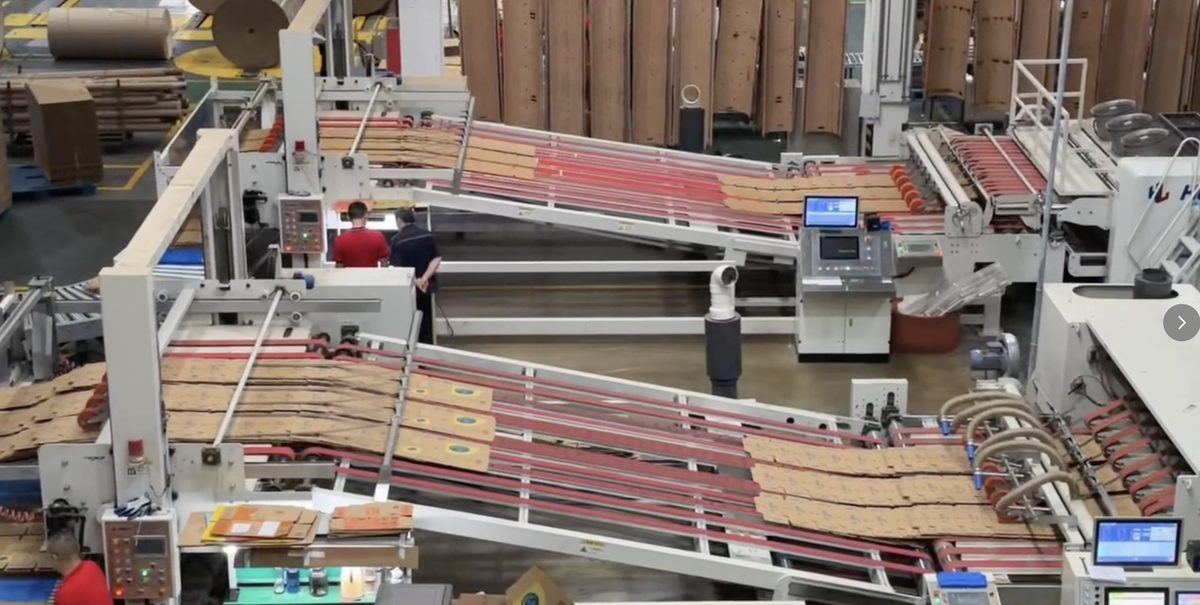
Here is the honest limit: lab tests are sampled. A perfect burst test on five cartons says nothing about carton number 5,000 — consistency across the production run is where most packaging quality failures actually happen.
That is why the lab is only half of pre-shipment inspection. The other half is walking the finished-goods warehouse: checking that the cartons stacked for your shipment match the tested specification, that print colors didn't drift mid-run, that the pallets are actually the pallets you approved. As a packaging sourcing agent in China, this is the part of our work buyers feel most directly — not the report, but the refusal to let a shipment leave when the run drifted from the sample.
Five things to write into your next RFQ or PO
- Name the test, not the adjective. "Bursting strength ≥ 250 kPa on the ordered board grade" beats "strong box" every time. (Example threshold — set yours with your QA team.)
- Tie reports to your production lot. A test report should reference your PO and material lot, not a catalogue from two years ago.
- Define sampling. State your AQL level and who pulls the samples — you, your agent, or the factory.
- Test the failure points, not just the material. Seals on poly mailers, handles on kraft bags, scores on folding cartons.
- Decide what happens on failure — before production starts. Rework, remake, or delayed shipment: agreed in writing, not negotiated over a failed container.